




Introduction
A blower motor resistor controls the fan speed in a vehicle's heating, ventilation, and air conditioning (HVAC) system. This article explains how it works, its main components, common problems, and how it differs from an electronic control module.
What Is a Blower Motor Resistor?
A blower motor resistor is an electrical component that controls the speed of the cabin blower motor. It changes the electrical resistance in the motor circuit, which limits the current and reduces the voltage available to the motor.
In traditional systems, the resistor uses several resistance paths to provide fixed fan speeds. When the driver selects a speed, the circuit sends current through the matching resistance path. This allows the blower motor to run at different speeds and move air through the cabin.
It is commonly used in vehicles with manual HVAC controls. Newer vehicles with automatic climate control may use an electronic blower motor control module instead.
Functions
A blower motor resistor has several functions in a vehicle's HVAC system:
- Controls Fan Speed: Changes the resistance in the motor circuit to provide different fan speeds.
- Regulates Airflow: Helps control how much heated or cooled air enters the cabin.
- Supports Manual Control: Allows drivers to select preset fan speeds through the control panel.
- Reduces Motor Voltage: Lowers the voltage supplied to the motor at lower speed settings.
Where Is the Blower Motor Resistor?
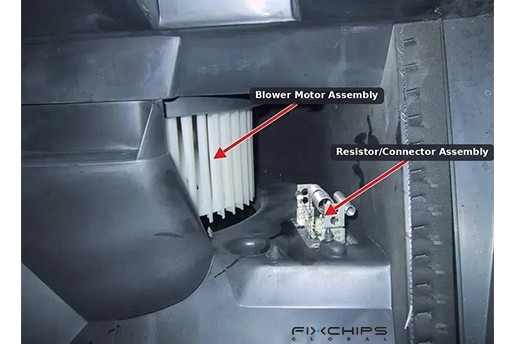
The blower motor resistor is usually installed in the HVAC air duct, close to the blower motor, often behind the glove box or under the dashboard on the passenger side. Its position allows moving air to cool the resistor while it is working.
Pros and Cons of Blower Motor Resistors
Blower motor resistors are simple and widely used in manual HVAC systems. However, they also have some limits.
Advantages
- Simple Design: Uses basic resistor circuits to control fan speed.
- Easy to Install: Usually has a simple connector and mounting design.
- Low Cost: Generally costs less than an electronic control module.
- Easy to Test: Can be checked with a multimeter.
- Fixed Speed Control: Provides several preset fan speeds.
Disadvantages
- Heat Generation: Converts part of the electrical energy into heat.
- Limited Speed Options: Usually provides only a few fixed speeds.
- Heat Damage: High temperatures can damage the resistor or thermal fuse.
- Lower Efficiency: Some electrical energy is lost as heat.
- Limited Compatibility: Must match the vehicle's HVAC circuit and motor.
Components of a Blower Motor Resistor
A traditional blower motor resistor consists of several basic parts. Each part helps control fan speed or protect the electrical circuit.
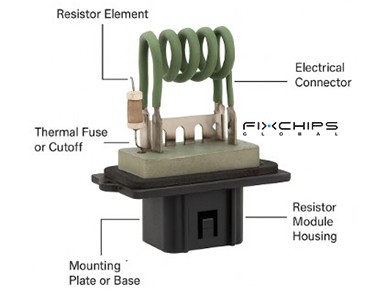
Resistor Wires: Create different resistance paths to control the motor speed.
Ceramic Heat Sink: Holds the resistor wires and helps manage the heat they produce.
Thermal Fuse: Opens the circuit when the temperature becomes too high, helping prevent overheating.
Mounting Plate: Holds the resistor assembly in the HVAC housing.
Electrical Connector: Connects the resistor to the vehicle wiring harness.
How Does a Blower Motor Resistor Work?
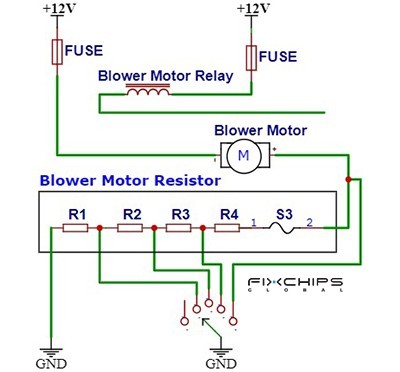
A blower motor resistor works by changing the resistance in the blower motor circuit. When the driver selects a fan speed, the switch sends current through a specific resistance path. More resistance reduces the voltage available to the motor, so the fan runs more slowly.
In a traditional system, the highest speed often bypasses the resistor and gives the motor a direct electrical path. The lower speeds use one or more resistor paths to reduce motor speed.
|
Selector |
Path |
Motor Voltage |
Notes |
|
Low |
Battery (+) → Switch → R1 → R2 → R3 → Motor → Ground (−) |
Lowest |
Current passes through all resistor sections |
|
Medium 1 |
Battery (+) → Switch → R2 → R3 → Motor → Ground (−) |
Low to medium |
R1 is bypassed |
|
Medium 2 |
Battery (+) → Switch → R3 → Motor → Ground (−) |
Medium to high |
R1 and R2 are bypassed |
|
High |
Battery (+) → Switch → Motor → Ground (−) |
Highest |
All resistor sections are bypassed |
Note: This is a simplified example of a traditional resistor circuit. Actual wiring arrangements and voltage readings vary by vehicle.
Specification of Blower Motor Resistors
|
Specification |
Typical Range |
|
Resistance Range |
0.1–5 Ω |
|
Material |
0.2–1.0 mm resistance wire (typical design reference) |
|
Power Rating |
20–100 W (assembly-level reference) |
|
Operating Voltage |
12–14.5 V DC |
|
Current Handling |
5–30 A |
|
Connector Type |
2–6 terminals |
|
Temperature Coefficient |
100–500 ppm/°C (material-dependent reference) |
|
Package |
30–100 mm mounting length |
Applications of Blower Motor Resistors
Blower motor resistors are mainly used in vehicle HVAC systems to control cabin airflow. Their applications include:
- Car Heating Systems: Controls the fan speed when warm air is sent into the cabin.
- Car Air Conditioning Systems: Adjusts airflow when the air conditioner is cooling the cabin.
- Vehicle Ventilation Systems: Controls the amount of fresh or recirculated air moving through the cabin.
- Manual Climate Control Systems: Provides preset fan speeds through the dashboard control panel.
- Commercial Vehicles: Helps regulate cabin airflow in vehicles with compatible resistor-based HVAC systems.
How to Check a Bad Blower Motor Resistor
A faulty blower motor resistor can cause some fan speeds to stop working or prevent the blower from operating at lower speeds. Before replacing it, check the common signs and possible causes.
Fan Only Works at High Speed
▶ Cause: The lower-speed resistor circuits or thermal fuse may have failed.
▶ Solution: Check the resistor's continuity and replace it if defective.
Some Fan Speeds Do Not Work
▶ Cause: One or more resistor paths may be damaged.
▶ Solution: Test each resistance path and replace the faulty assembly.
No Air Comes from the Vents
▶ Cause: The resistor may have failed, but a faulty blower motor, fuse, relay, or power supply can also cause this problem.
▶ Solution: Check the power supply, wiring, blower motor, and resistor before replacing any part.
Burnt Smell Near the Dashboard
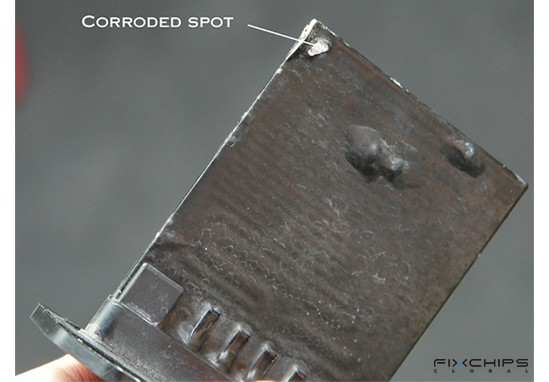
▶ Cause: Excessive heat may have damaged the resistor or electrical connector.
▶ Solution: Inspect the resistor and connector for heat damage and replace damaged parts.
Repeated Resistor Failure
▶ Cause: A worn blower motor, blocked cabin air filter, or restricted airflow may cause overheating.
▶ Solution: Check the motor, fan wheel, air filter, and air intake before installing a new resistor.
How to Test a Blower Motor Resistor
After identifying possible signs of failure, test the blower motor resistor before replacing it. A multimeter can help check its resistance and electrical continuity.
|
Step |
Description |
Tip |
|
1. Turn Off Power |
Switch off the ignition and disconnect the negative battery cable. |
Follow the vehicle's battery and airbag safety instructions. |
|
2. Locate the Resistor |
Find the resistor near the blower motor, usually behind the glove box or under the dashboard. |
Check the vehicle service manual for its exact location. |
|
3. Disconnect the Connector |
Release the locking tab and unplug the electrical connector. |
Check for loose pins, corrosion, or melted plastic. |
|
4. Remove the Resistor |
Remove the mounting screws and take out the resistor assembly. |
Allow the resistor to cool before handling it. |
|
5. Set the Multimeter |
Set the multimeter to the resistance (Ω) mode. |
Select a suitable resistance range if needed. |
|
6. Measure Resistance |
Place the probes on the specified resistor terminals and measure each resistance path. |
Use the vehicle's service manual for the correct terminal pairs and resistance values. |
|
7. Check Continuity |
Check whether each required circuit has electrical continuity. |
An open circuit may indicate a damaged resistor or thermal fuse. |
|
8. Compare Results |
Compare the readings with the manufacturer's specifications. |
Replace the resistor if the readings are outside the specified limits. |
How to Replace a Blower Motor Resistor
Replacing a blower motor resistor is usually a simple repair on vehicles with easy access to the component. However, the work may require professional help if dashboard parts or other electrical components must be removed.
Steps to Replace a Blower Motor Resistor
1. Disconnect the Battery: Turn off the ignition and disconnect the negative battery cable according to the service instructions.
2. Locate the Resistor: Find the resistor near the blower motor, usually inside the HVAC housing.
3. Remove the Access Panel: Remove the glove box or other panels needed to reach the resistor.
4. Disconnect the Connector: Release the locking tab and unplug the wiring harness.
5. Remove the Old Resistor: Unscrew the mounting screws and carefully remove the faulty resistor.
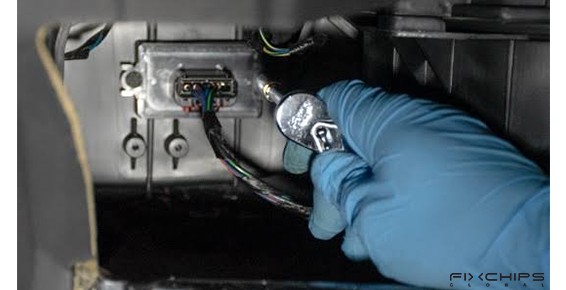
6. Inspect the Circuit: Check the connector, wiring, blower motor, and air intake for damage or blockages.
7. Install the New Resistor: Fit a compatible replacement into the original mounting position and secure it with the screws.
8. Reconnect the Wiring: Connect the electrical plug and make sure it is locked in place.
9. Reconnect the Battery: Restore the battery connection following the vehicle's service instructions.
10. Test the Fan: Check all available fan speeds and confirm that the blower works correctly.
11. Reinstall the Panels: Put the glove box and other removed panels back in place.
Blower Motor Resistor vs. Electronic Control Module
A blower motor resistor and an electronic control module both control the speed of a vehicle's blower motor. However, they use different control methods and are designed for different HVAC systems.
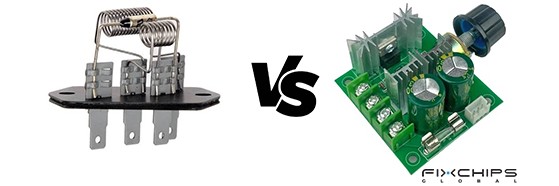
|
Comparison |
Blower Motor Resistor |
Electronic Control Module |
|
Control Method |
Uses resistance to reduce motor voltage. |
Uses electronic circuits, often with PWM signals, to control motor speed. |
|
Fan Speed Options |
Usually provides several fixed speeds |
Can provide more gradual and adjustable speed control |
|
Efficiency |
Loses electrical energy as heat in the resistor |
PWM control can reduce control-related energy losses |
|
Complexity |
Simple resistor circuits and fewer electronic parts |
Uses electronic components and more complex control circuits |
|
Durability |
Can be damaged by heat and excessive current |
Can be damaged by overheating or electrical faults |
|
Replacement Cost |
Generally lower |
Generally higher due to its electronic design |
|
Common Use |
Traditional manual HVAC systems |
Automatic climate control and variable-speed blower systems |
Frequently Asked Questions
What is a blower motor resistor?
A blower motor resistor is an electrical component used to control the speed of a vehicle's cabin blower motor. It changes the resistance in the motor circuit to provide different fan speeds.
How can I test a blower motor resistor?
You can test a blower motor resistor with a multimeter set to resistance (Ω) mode. Measure the resistance between the specified terminals and check for continuity, then compare the readings with the vehicle manufacturer's specifications.
How does a blower motor resistor control fan speed?
A blower motor resistor controls fan speed by changing the resistance in the motor circuit. Higher resistance reduces current and lowers fan speed, while lower resistance allows more current and increases fan speed.
How do I change a blower motor resistor?
Disconnect the negative battery cable before removing the old resistor. Unplug the electrical connector, remove the mounting screws, install the new resistor, and reconnect the wiring. Test all fan speeds after installation.
Where can you find the blower motor resistor?
The blower motor resistor is usually mounted on or near the HVAC housing, close to the blower motor. In many vehicles, it is located behind the glove box or under the dashboard on the passenger side.
What are the common signs of a bad blower motor resistor?
Common signs include a fan that only works at high speed, missing fan speed settings, or a blower motor that stops working. A burnt smell or melted connector may also indicate overheating.
Related Articles
Resistor Symbol - Types, Standards and How to Identify
Exploring Variable Resistor’s Types, Functions and Uses


